Measure Twice, Sweat Once: The Basement Ceiling Check That Saves Your Elliptical Purchase
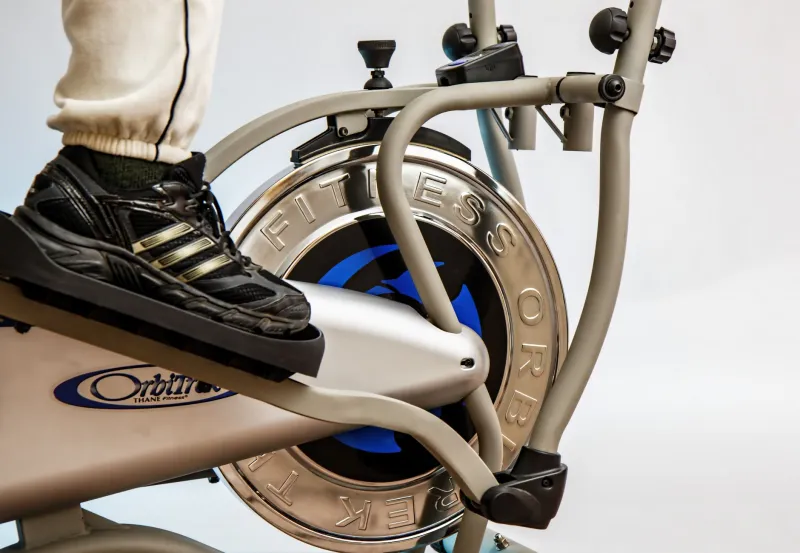
We get a steady stream of emails at Elliptical Reviews, and every few weeks one shows up that reads a lot like this: *"My elliptical arrived Friday. I love it. Except my head clips the ceiling joists every time I hit the top of the stride. What now?"
By then, it's usually too late. The box is open, the assembly is done, and the return window is ticking. That's a shame, because this whole mess is avoidable with a tape measure and about four minutes of math.
Why Ellipticals Need More Vertical Room Than You Think
Here's the thing people miss: an elliptical doesn't just add its own height to the room. Your body travels in an arc. When you're mid-stride at the top of the pedal path, your head sits noticeably higher than it does when you're standing flat-footed on the floor next to the machine.
Add it up and you've got three numbers stacked against your basement ceiling:
- Machine height — typically 60 to 68 inches for most full-size models
- Your height plus the pedal rise — a tall user at the top of the arc can add 8 to 12 inches of effective elevation
- Flooring — a rubber mat or foam tiles eat another half-inch to an inch
A 6'2" rider on a 66-inch machine with a thick mat in a 7-foot bonus room? That's a collision waiting to happen.
The Simple Formula That Prevents a $1,000 Mistake
Grab a tape measure and do this before you order anything:
- Measure your ceiling height at the lowest point — not the middle of the room. Basements and bonus rooms often have ductwork, soffits, beams, or dropped sections that sit 6 to 10 inches lower than the main ceiling.
- Add your height in inches to 10. That's a safe estimate for how far your head rises above the pedals at the top of your stride.
- Add the machine's listed height plus one inch for a mat.
If your total comes in under your lowest ceiling point, you're clear. If not, you need a shorter machine — or a different room.
A quick example: you're 5'10" (70 inches), so figure 80 inches of total reach at peak stride. Add a 62-inch machine and a mat, and you need roughly 145 inches... okay, that's clearly overkill, which is exactly why the real-world rule is simpler: the machine plus 12 inches of headroom clearance above the pedal arc. If your lowest ceiling point gives the machine at least a foot of breathing room over your head at full stride, you're fine.
The most common failure we hear about is the 7-foot ceiling. Eight-foot ceilings are almost always safe for riders up to about 6'2". Seven feet is where the returns start.
Real Returns, Real Regrets
A reader from Ohio told us he bought a $1,100 front-drive model for his finished basement, assembled it solo on a Saturday, and discovered on Sunday that his 6'3" frame grazed the drywall on every upstroke. The retailer charged a 15% restocking fee plus return freight — nearly $250 to undo a mistake a $3 tape measure could have caught.
Another reader in Texas dodged the bullet entirely: she measured first, realized her 6'5" husband didn't clear the drop ceiling over the bonus room, and bought a compact model instead. Total cost of her due diligence? Zero dollars and one smug phone call to her sister.
Machines That Fit Under 8-Foot Ceilings
Most riders — up to about 6'2" — are fine under a standard 8-foot ceiling with any of these:
| Machine | Listed Height | Best For |
|---|---|---|
| Schwinn 470 | ~68" | Riders up to 6'2" |
| Nautilus E616 | ~66" | Mid-range budgets |
| Sunny Health SF-E3919 | ~64" | Tight spaces, shorter riders |
| ProForm Carbon EL | ~65" | iFit users under 6'0" |
If your ceiling is 7 feet or lower — or you're north of 6'2" — look at compact and center-drive designs with a flatter pedal path and a shorter frame:
- Bowflex Max Trainer series — low profile, steep climbing motion, minimal head rise
- Sole E25/E35 with the pedals low — shorter effective arc than front-drive rivals
- Horizon Fitness Evolve 3 — a folding model designed exactly for low-ceiling rooms
One Last Check Before You Click Buy
Measure at the ducts, not the drywall. Account for the mat. Know your own height — and if you share the machine with a taller spouse, measure for the tallest user, not yourself. Four minutes of homework beats a $250 restocking fee every single time.
Your knees will thank you. So will your drywall.