The $300 Elliptical Question: Smart Buy or Fast Regret?
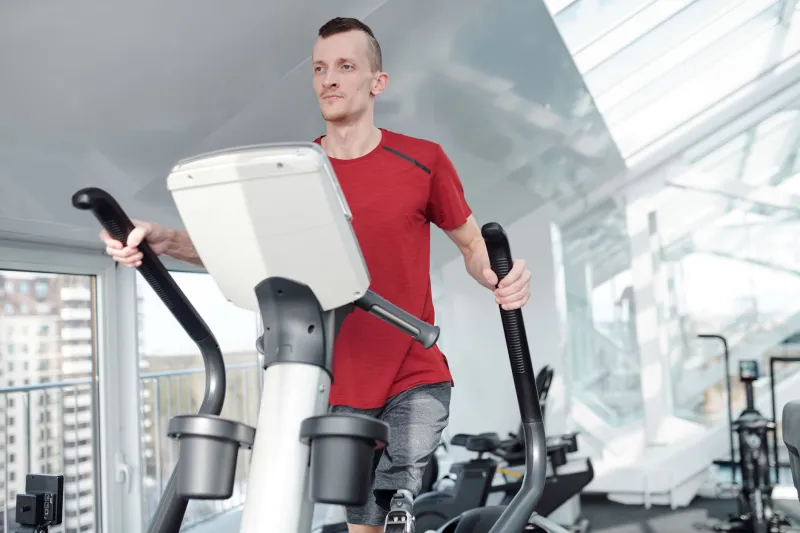
Every few weeks, someone emails us the same question: "Can I get away with a $300 elliptical from a big-box store?" It's a fair question, and honestly, the answer is more nuanced than most review sites admit. Some budget machines are genuinely fine. Others will be rattling in your garage by March. We put a stack of sub-$400 machines head-to-head with $800 and $1,500+ models to figure out exactly where your money goes — and where it disappears.
What $300 Actually Buys You
Let's start with the truth: a budget elliptical today is better than a budget elliptical five years ago. Magnetic resistance has trickled down, so even entry-level machines skip the squeaky brake-pad systems of the past. You'll typically get:
- 8 to 16 resistance levels (magnetic)
- A stride length somewhere between 12 and 14 inches
- A basic LCD console with time, speed, and calories
- A machine weight of 70–100 lbs with a 220–250 lb capacity
That's not nothing. For casual use — 20 minutes a few times a week, one user, moderate pace — a decent budget machine can absolutely do the job.
Where Budget Machines Fall Apart
The compromises show up the moment you push harder than "light stroll."
Stride length is the big one. Most sub-$400 machines top out around 13–14 inches. If you're 5'10" or taller, that short stride turns a natural gliding motion into a choppy, knee-jamming shuffle. We had a 6'2" tester try a popular budget model and he quit after ten minutes. On a 20-inch stride machine, he did 45.
Flywheel weight matters more than marketing suggests. Budget machines use light flywheels (often under 10 lbs), which means the pedal motion feels uneven at the top and bottom of each revolution — like pedaling through molasses, then nothing. Heavier flywheels on mid-range machines ($700–$1,200) create that smooth, momentum-driven feel that keeps you coming back.
Then there's the wobble factor. Light frames plus fast movement equals instability. Push a budget machine hard and it rocks, creaks, and walks across your floor. Premium models weigh 150+ lbs with beefy stabilizers for a reason.
The Warranty Tells the Real Story
Here's our favorite shortcut when evaluating any machine: read the warranty before the features list. Budget ellipticals typically carry 90 days to 1 year on parts. Mid-range brands offer 5–10 years on the frame. Premium machines (NordicTrack, Sole, TRUE and the like) often cover 10+ years on frame, with lifetime options at the top end.
A company's warranty is a bet on its own product. When the frame warranty is 90 days, that tells you something.
When a $300 Elliptical Is a Smart Buy
We'll say it plainly: sometimes cheap is correct. Buy budget if:
- You're testing whether you'll actually use an elliptical before committing
- You're a shorter user (under 5'7") with a light stride
- It's a secondary machine for a guest room or office
- You genuinely exercise 2–3 short sessions a week, max
When You'll Regret Saving the Money
You'll wish you'd spent more if:
- You're training seriously or trying to lose significant weight
- Anyone over 5'9" will use it regularly
- Multiple household members will share the machine
- You hate noise — budget machines get louder as bearings wear
The hidden cost of a bad budget machine isn't the $300. It's the $300 plus the return shipping headache, plus the months of skipped workouts while you debate what to replace it with. We've heard that story more times than we can count.
Our Verdict
If your budget is genuinely $300, buy the best-reviewed budget machine you can find, keep your expectations calibrated, and treat it as a bridge — not a destination. But if you can stretch to $800–$1,000, do it. That's the sweet spot where stride length, flywheel heft, and warranty coverage stop being compromises. The premium tier above $1,500 buys refinement and features, not fundamentals.
The best elliptical isn't the cheapest or the fanciest. It's the one still running smoothly in year three — while you're still using it.