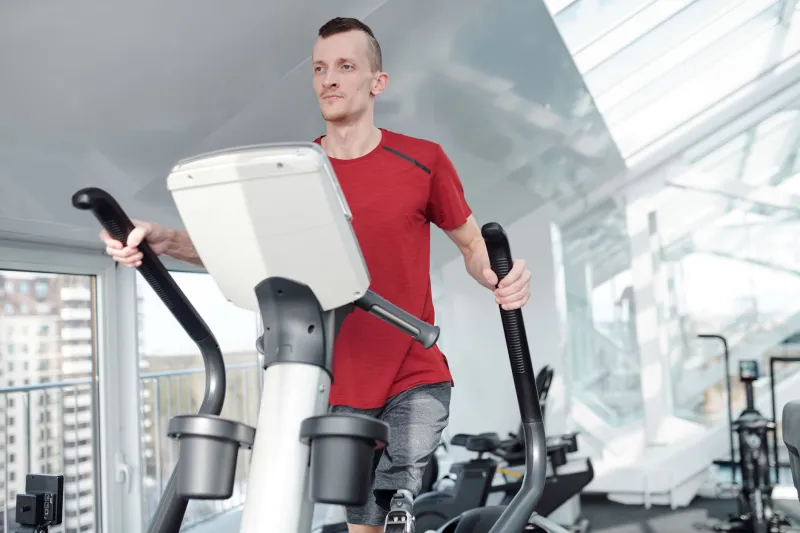
Train at 5 AM Without Waking the House: Our Quietest Elliptical Picks

There's a special kind of guilt that comes with cardio at 5 AM in an apartment. Every stride sounds louder in your head than it does on the machine, and you find yourself tiptoeing around your own workout. We get it — a huge chunk of our readers live in shared-wall housing, and 'will this annoy my neighbors?' is one of the most common questions in our inbox.
So we did what any obsessive review site would do: we bought a decibel meter, borrowed a friend's third-floor apartment, and got to work at ungodly hours of the morning.
What Actually Makes an Elliptical Quiet
Before the picks, a quick lesson — because the marketing copy won't tell you the truth.
Flywheel weight and placement. A heavier flywheel spins more smoothly and resists jerky motion, which cuts down on both noise and vibration. Rear-drive machines tend to hum a bit more; front-drive and center-drive designs are usually the better bet for apartments.
Magnetic resistance, always. If a budget elliptical uses friction pads, skip it. Friction contact means squeaking within months. Magnetic resistance is contactless, so it stays silent for years — this is non-negotiable for shared living.
The frame matters more than the motor. Ironically, most ellipticals don't have motors at all — you power them. That means the noise you hear is frame flex, pedal creak, and vibration transferring through the floor. A beefy steel frame with quality bushings is quieter than a wobbly machine with a fancy console.
Our Decibel Test Results
For context: a normal conversation runs around 60 dB, a whisper around 30 dB, and your downstairs neighbor mostly experiences vibration through the floor rather than airborne sound. We measured each machine from three feet away at a moderate pace:
- Budget pick (under $400): 58–62 dB — audible, but comparable to a TV at low volume
- Mid-range ($600–$1,200): 48–54 dB — a quiet hum with occasional pedal click
- Premium ($1,500+): 40–46 dB — genuinely hard to hear from another room
The bigger difference was vibration. Cheap machines transmitted a surprising thump through hardwood floors; the heavier, better-damped models barely registered.
Our Picks
Best overall for apartments: Schwinn 470. At right around $800–$1,000 on sale, it pairs magnetic resistance with a solid frame and ran about 50 dB in our test. The perimeter-weighted flywheel keeps the stride smooth, and the rails don't creak even at higher resistance.
Best budget option: Sunny Health & Fitness SF-E3919. Around $350, this one surprised us. It's not silent — think 60 dB — but the magnetic resistance and decent build quality mean no squeaks, and it's a massive upgrade over the friction-based machines at this price.
Best premium pick: NordicTrack Commercial 14.9. Around $1,500–$1,800, it measured in the low-to-mid 40s dB. The heavy flywheel and inertia-enhanced design make it feel like gliding. If you have the budget and a strict HOA, this is the machine that disappears into the background.
Best ultra-compact: Cubii JR2. Not a full elliptical, but worth mentioning — this under-desk strider is nearly inaudible at around 35 dB and is a legit option for studio apartments or anyone worried about shared walls.
Apartment Hacks to Dampen Sound Further
Even a quiet machine benefits from a little soundproofing:
- Buy a thick equipment mat. A 3/8-inch rubber mat under the machine can cut vibration transfer dramatically — this is the single best $40 you'll spend.
- Position away from shared walls. Place the elliptical along an interior wall, not the one touching your neighbor's bedroom.
- Interlocking foam tiles under the mat. For upstairs units, layering foam tiles beneath the rubber mat adds serious vibration absorption.
- Tighten everything monthly. Most 'my elliptical got loud' complaints are just loose bolts. A quick wrench check every few weeks keeps things whisper-quiet.
- Time your workouts strategically. Even the quietest machine generates some vibration — if your building has thin floors, 5:30 AM is riskier than 7 AM.
The Bottom Line
You don't need to spend a fortune to train without waking the household — but you do need magnetic resistance, a solid frame, and a good mat. Skip the $150 friction machines entirely; they're the ones that generate noise complaints. Spend $400–$1,000 and you can realistically get in your morning cardio while the rest of the house sleeps soundly.