Six Months of Neglect vs. Six Months of Care: What Actually Happens to an Elliptical
Every elliptical review ever written ends the same way: "maintain it regularly and it'll last for years." Great. Maintain what, exactly? How often? With what? Nobody says.
So we ran an experiment. We set up three comparable mid-priced ellipticals in a garage gym and subjected each to a different maintenance philosophy for six months, logging every squeak, wobble, and bit of wear along the way. Here's what we learned — and what we'd actually recommend doing.
The Three Contenders
Machine A — The Neglector: Zero maintenance. Used 4–5 times a week by an adult doing mixed interval work. Never wiped, never tightened, never inspected.
Machine B — The Wiper: A 10-minute monthly routine: wipe down rails and handles with a damp cloth, check and snug any loose bolts with the included Allen wrench, vacuum underneath. Nothing more.
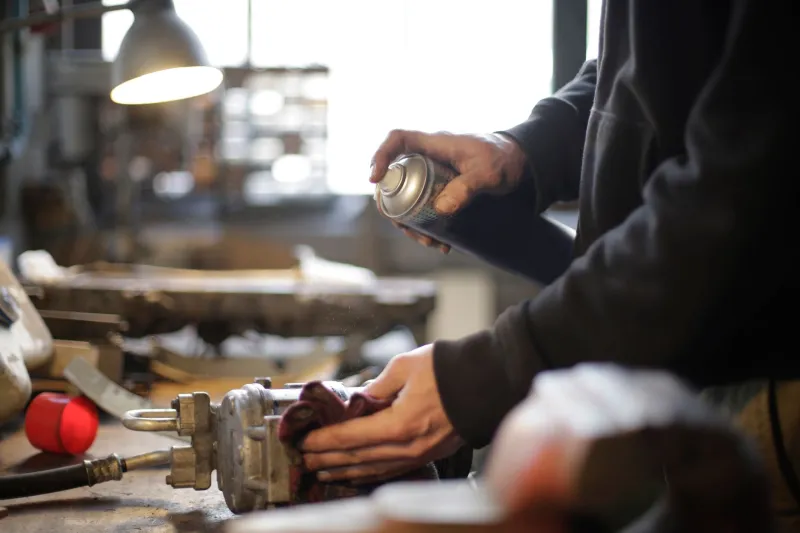
Machine C — The Full Kit: Everything Machine B got, plus a quarterly treatment: silicone-based rail lubricant (never WD-40 — more on that below), polish on the stride rails, pedal pivot inspection, and a console contact cleaning.
Month-by-Month: What Broke
Months 1–2: All three machines ran identically. No surprise — new equipment doesn't need much. The only difference: Machine A collected a visible layer of dust on the rails by week six.
Months 3–4: The first divergence. Machine A developed a faint rhythmic squeak on the left stride arm — dust and grit on the rail acting like sandpaper with every stride. Machine B stayed quiet. Machine C stayed quiet and, thanks to the lubricant, felt noticeably smoother underfoot. We measured stride noise with a phone decibel app: Machine A was running about 4 dB louder at the same cadence.
Months 5–6: Machine A's squeak became a grind, and the left pedal developed a subtle click at the bottom of each stride — likely a dry pivot bearing. Machine B developed one loose bolt on the console mast (caught and fixed at the month-five check). Machine C remained quiet, smooth, and honestly a little smug.
The Cost Math
When we finally had Machine A serviced at month six, the tech quoted $140 for a cleaning, rail service, and pivot lubrication — roughly what the other two machines spent on maintenance combined over the entire six months. Left another six months, that grit-on-rail friction was on track to wear the stride rails enough to need actual parts.
Machine B's total investment: about $0 in supplies and 10 minutes a month. Machine C's: roughly $35 in supplies and about 45 minutes a quarter.
The Verdict: The Premium Kit Is Mostly Overkill
Here's the honest takeaway: the difference between "basic" and "premium" care was real but small over six months. The big gap was between doing nothing and doing anything at all. Dust and grit on the rails, plus loose bolts working themselves free, account for the vast majority of preventable elliptical problems.
The Realistic Checklist
Every month (10 minutes):
- Wipe rails, pedals, and handles with a damp cloth
- Snug every accessible bolt — they loosen with vibration
- Vacuum or sweep under and around the machine
Every 3 months (15 minutes):
- Apply a silicone-based lubricant to the stride rails if your manual calls for it (check first — some rail systems shouldn't be lubed)
- Listen at slow speed for squeaks or clicks; investigate anything new
- Wipe the console connections if the display acts glitchy
Never:
- Use WD-40 on rails. It's a solvent, not a lubricant, and it attracts dust like a magnet.
If you own an elliptical and you've done none of this, don't panic — but grab a cloth this weekend. Ten minutes a month is the difference between a machine that purrs for a decade and one that grinds its way to the curb.