Grip It and Quit It: The Case Against Your Elliptical's Hand Sensors
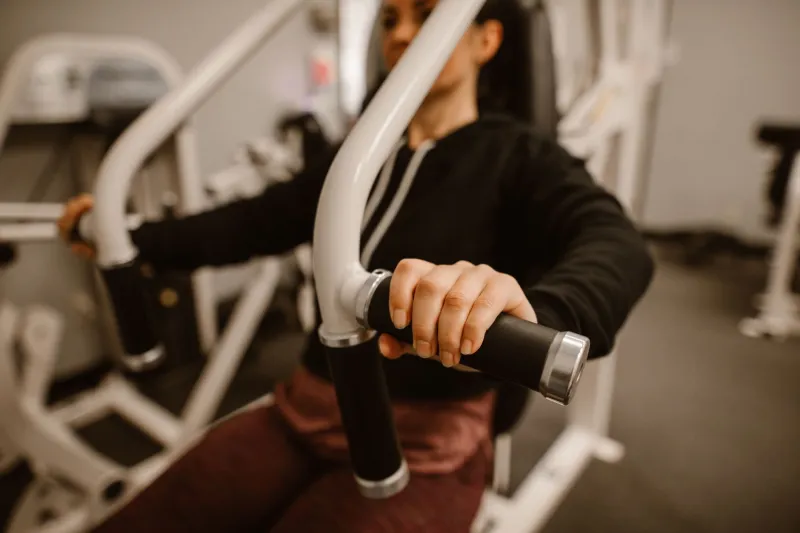
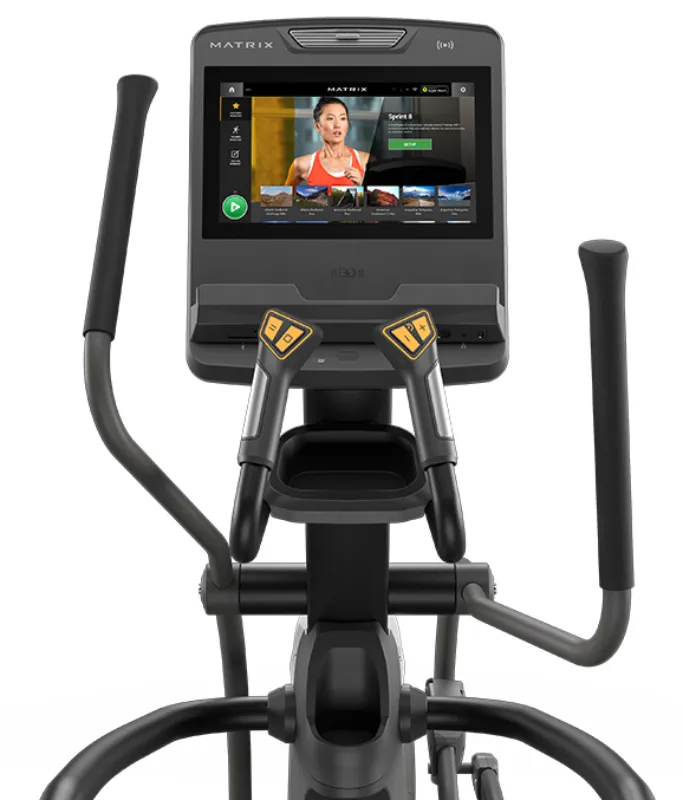
There's a ritual familiar to anyone who's ever stepped onto an elliptical: you start moving, the console asks for your age, you grab the metal pads on the moving handles, wait about fifteen seconds, and then squint at a heart rate number that feels... off. Maybe it's suspiciously low. Maybe it spikes to 178 the moment you shift your hands. Either way, you're left wondering if you're actually working hard or if the machine is making things up.
Spoiler: it's mostly making things up. We ran a simple experiment to prove it — and then figured out what you should actually do about it.
The Test: One Workout, Three Monitors
We completed three identical 30-minute sessions on the same mid-range elliptical over one week, matching resistance, incline, and cadence as closely as possible. Each session used a different heart rate source:
- The machine's grip sensors (EKG-contact pads built into the handles)
- A basic chest strap paired to a watch
- A popular wrist-based fitness tracker
We also logged perceived effort every five minutes on a 1–10 scale as a sanity check.
The chest strap and wrist tracker agreed with each other within about 4–6 beats per minute throughout. The grip sensors? They lagged 20–40 bpm behind our actual effort for long stretches, then occasionally jumped wildly when we changed hand position. During a hard interval where the chest strap read 152 bpm, the grips reported 118 — right as we were gasping.
Why Hand Sensors Fail (It's Physics, Not Malice)
Contact heart rate pads work by measuring tiny electrical signals passing through your skin — the same principle as an EKG at the doctor's office. But unlike a medical setting, your elliptical grips are fighting a losing battle:
- Dry or calloused hands conduct poorly, especially in winter when indoor air is desert-dry.
- Sweat is a mixed bag — a little helps conductivity, a lot creates noisy interference.
- A loose or shifting grip breaks the signal entirely. Adjust your hands to reach the console and you've lost the reading.
- The moving handles themselves mean the contact point is constantly changing, unlike the fixed metal pads on a treadmill.
The result is a reading that's less "measurement" and more "educated guess with a delay." Most consoles average readings over 10–15 seconds, so by the time a number appears, it describes how you felt half a minute ago.
What the Numbers Mean for Your Training
If you're using heart rate to stay in a target zone — say, 60–70% of max for fat-burning work, or 80%+ for intervals — a 30 bpm error isn't a rounding problem. It's the difference between thinking you're cruising when you're actually in threshold territory, or assuming you're working hard when you're barely warm.
Worse, many ellipticals use that faulty grip reading to drive their built-in "heart rate programs," automatically adjusting resistance based on garbage data. You can end up with a workout that never pushes you because the machine thinks your heart rate is fine.
What to Buy Instead
The good news: reliable heart rate monitoring is cheap, and none of it requires your elliptical to cooperate.
Chest straps ($25–$90). Still the gold standard for accuracy. Modern Bluetooth straps pair with nearly any fitness watch, phone app, or tablet running the Peloton or iFIT-style apps. If you only buy one piece of gear, buy this.
Wrist wearables ($50–$300). Optical wrist sensors have gotten genuinely good — our test tracker tracked within a few bpm of the chest strap at steady efforts. They read slightly late during rapid intervals, but for general zone training, they're plenty accurate and you never think about them.
Fitness rings ($200–$300+). Convenient and consistent for trends, though less useful for real-time zone work since there's no screen to glance at mid-workout.
Armbands ($30–$80). Worn on the forearm, these optical sensors split the difference — more accurate than wrist during intervals, less fussy than a strap.
The One-Second Fix
Before you spend a dime, try this: keep your hands on the grips for a full 60 seconds without moving them, breathing steadily. If the number that appears roughly matches your effort, your sensors work okay for steady-state checks. If it's still nonsense — and on most machines it will be — you have your answer.
Bottom line: treat your elliptical's grip sensors as a novelty, not a training tool. A $30 chest strap will tell you more about your workout than any console ever will, and your heart rate training will finally mean something.