The 250-Pound Question: What Weight Capacity Ratings Really Mean Before You Buy
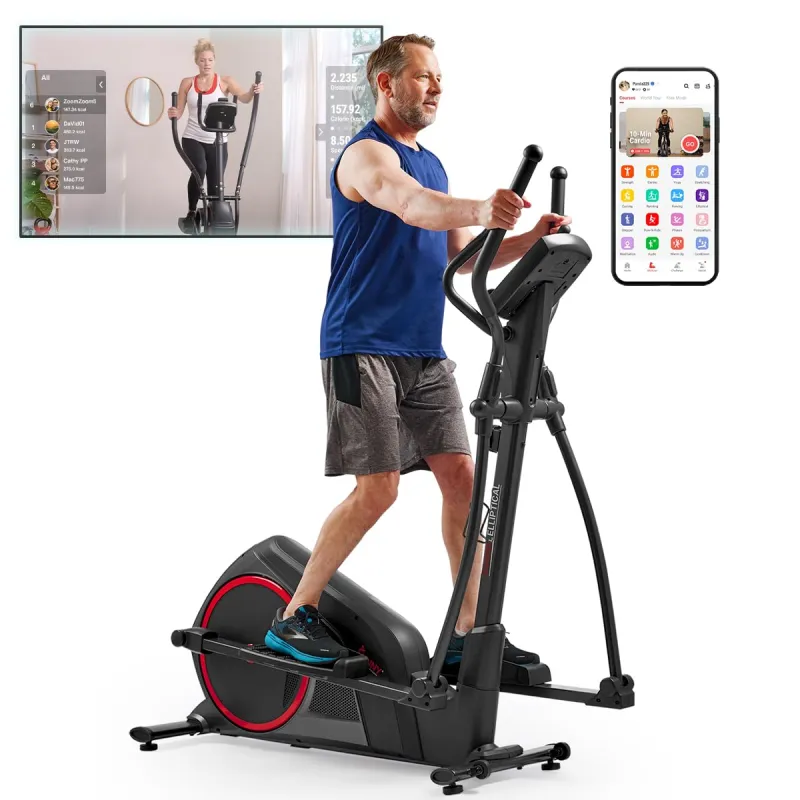
Photo: heavy duty elliptical machine home gym, via images-na.ssl-images-amazon.com
There's a moment on every cheap elliptical that bigger users know well. You're ten minutes into a workout, finding your rhythm, and the machine lets out a sound — a soft creak, then a subtle flex under the pedals. Nothing's broken. But something's telling you that you're asking more of this machine than it was built to give.
That moment is what this article is about. Weight capacity is printed on every spec sheet in the industry, and it's the number shoppers skip past faster than any other. That's a mistake, because it's arguably the single best proxy for how a machine is built overall.
Where Those Numbers Come From
Here's the uncomfortable truth about weight ratings: there's no single federal standard that governs how elliptical manufacturers test them. Most companies follow voluntary standards from ASTM International, which outline testing protocols — essentially, a machine gets loaded and cycled tens of thousands of times to simulate years of use.
But the interpretation is where things get loose. Some manufacturers treat the rating as a static load limit — how much weight the frame can hold without failing. Others treat it as a dynamic limit — how much weight can safely stride, bounce, and push off the pedals thousands of times. The dynamic number is always lower, and it's the one that actually matters for a real person doing real workouts.
A machine rated for 300 pounds under static testing might effectively be a 230-pound machine in practice. The rating isn't a lie, exactly. It's just answering a different question than the one you're asking.
Why Budget Machines Underperform Their Stickers
Walk into a big-box store and you'll find $299 ellipticals advertising 250-pound weight capacities. Compare that to a $1,500 commercial-grade machine rated for 350. Same rating, wildly different machines. What gives?
Three things, mostly:
- Frame material thickness. Budget machines use lighter-gauge steel tubing. A thick 11-gauge frame and a thin 14-gauge frame can both "hold" 250 pounds — for a while.
- Bearing and axle quality. Heavier users generate more torque at the pedal arms. Cheap bushings wear fast under that load, which is where the creaking starts.
- Base stability. A heavier machine with a wider stance absorbs stride force. A lightweight machine transfers it into wobble, and wobble is what kills frames and floors alike.
The practical rule we've landed on after years of testing: treat a budget machine's weight rating as a ceiling, and subtract 15-20% for real-world comfort. If you weigh 240 pounds, a budget elliptical rated 250 is going to feel strained. A machine rated 300 will feel appropriate.
What the Numbers Look Like Across Price Tiers
We pulled ratings from machines we've tested across the market to show the general pattern:
| Price Range | Typical Rating | Realistic Comfort Zone |
|---|---|---|
| Under $500 | 220–250 lbs | ~190–210 lbs |
| $500–$1,000 | 275–300 lbs | ~240–265 lbs |
| $1,000–$1,500 | 300–325 lbs | ~275–300 lbs |
| $1,500+ (light commercial) | 325–400 lbs | 300+ lbs |
Notice the pattern: as price climbs, the gap between the sticker rating and honest real-world capacity narrows. Premium brands tend to rate conservatively because their buyers — and their warranty departments — can't afford failures.
Matching Machine to Body Type
If you're a larger user, here's how we'd approach a purchase:
Under 200 pounds: Almost any machine with decent reviews will hold up. Spend your money on stride length and features instead.
200–250 pounds: This is the range where budget machines start flexing. Look for at least a 300-pound rating, and prioritize flywheel weight (heavier flywheels stay smoother under load) over screen features.
250–300 pounds: You want a heavy machine, full stop. Check the machine's own shipping weight — if the elliptical weighs under 120 pounds, it's probably not built for you. Look for ratings of 325+ and welded rather than bolted frame joints where possible.
Over 300 pounds: Your options narrow to light-commercial and commercial machines, and honestly, that's fine. These are also the machines that feel the smoothest and last the longest. Consider it an upgrade, not a limitation.
The Spec That Predicts Everything Else
Here's the real reason we obsess over this number: weight capacity correlates with nearly every quality marker on an elliptical. Machines rated for heavier users almost always have longer strides, heavier flywheels, better bearings, and longer warranties. Manufacturers don't build one tough part and cheap everything else — the frame rating forces the whole machine up in quality.
So even if you weigh 160 pounds, a 350-pound rating tells you something useful: this machine was overbuilt, and overbuilt machines are the ones still running smoothly a decade from now.
Read the sticker. Do the math. Your knees — and your floors — will thank you.